
Illegal activities of Southern bosses during the weeks between Friday, March 20, and Friday, April 3
Every day across the south workers are killed on the job, stolen from, discriminated against, or sexually harassed. Sometimes the employers are caught. Here are a few stories from last week:
North & South Carolina Thieves
The U.S. Department of Labor has recovered $95,095 in back wages for 33 cooks at three IHOP franchise locations that failed to pay overtime – as federal law requires – at locations in both North and South Carolina.
The department’s Wage and Hour Division found a restaurant franchise based in Westend, North Carolina violated overtime provisions of the Fair Labor Standards Act at all three of its locations after it paid cooks straight time for all hours worked instead of the federally-mandated time-and-one-half their regular rate for hours worked in excess of 40 in a workweek. The employer – which operated all three establishments as IHOP restaurants – also maintained payroll records that falsely listed those wage payments as bonuses.
“Wage violations like these are all too common in the restaurant industry. Employers are encouraged to review their pay practices to ensure they pay workers in accordance with the law,” said Wage and Hour Division Acting District Director Michael Gannet in Columbia, South Carolina.
Georgia Endangerers
A U.S. Department of Labor follow-up inspection of two Cartersville stone product manufacturers found that the employers failed to address safety violations related to silica exposure the department had identified in previous investigations.
After a follow-up inspection, the department’s Occupational Safety and Health Administration cited Stone Atlanta Countertops Inc., which owns the facility, for two repeat, seven serious, and three other-than-serious violations related to exposures to noise and respirable crystalline silica, including failure to develop a written respiratory protection program, a written exposure control plan for silica, and a written hazard communication program for hazardous materials.
OSHA also cited GT Stone Granite LLC with eight repeat, four serious, and two other-than-serious violations for employees overexposed to noise and respirable crystalline silica. In addition, OSHA found the employer failed to implement a written exposure-control plan and a hazard communication program.
Regular listeners of The Valley Labor Report will recognize silica as the major cause for the rise in black lung over the last 20 years among coal miners.
OSHA proposed $42,699 in penalties for Stone Atlanta Countertops Inc. and $73,607 in penalties for GT Stone Granite LLC.
Texas Discriminators
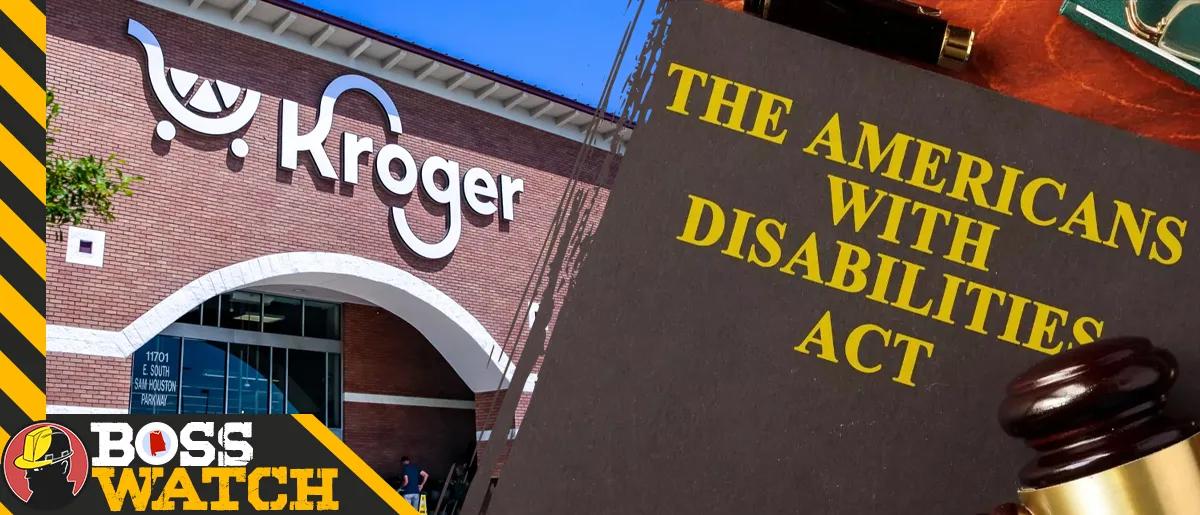
Houston Division, operator of Kroger grocery store #300 in Houston’s Clear Lake/NASA area, violated federal employment law when it failed to accommodate and then fired an employee because of her disability, the U.S. Equal Employment Opportunity Commission (EEOC) charged in a lawsuit.
In its lawsuit, the EEOC charged that a self-service checkout attendant suffering from neuropathy, who for three preceding years worked successfully using a walker, was stripped of that reasonable accommodation by new management. The employee’s neuropathy limited her ability to walk and move, and her feet went numb if she was required to stand for too long.
Kroger’s new management failed to interact with the employee to determine if the previously granted accommodation was reasonable or if another was potentially available. Instead, management told her to seek leave – which she did not want or need – until she could return to work without an accommodation. The employee was terminated by Kroger when she could not support a need for leave with medical documentation, according to the suit.
Such alleged conduct violates the Americans with Disabilities Act (ADA), which prohibits employers from discriminating against employees because of their disabilities, including denying such individuals a reasonable accommodation, absent undue hardship, and firing them because they need an accommodation. The EEOC filed suit in U.S. District Court for the Southern District of Texas, Houston Division, after first attempting to reach a pre-litigation settlement through its conciliation process.
In the lawsuit, the EEOC seeks back pay and instatement or front pay for the aggrieved employee, plus compensatory and punitive damages in amounts to be determined at trial. In addition, the EEOC is seeking a permanent injunction enjoining Kroger from engaging in disability discrimination in the future, and an order requiring Kroger to institute and carry out policies, practices and programs which govern requesting, processing and granting reasonable accommodations for disabilities, and which eradicate the effects of Kroger’s alleged discriminatory employment practices.