
Here’s what workers in the US South and the colonies were up to during the week between Friday, February 13, and Friday, February 20
New Campaigns
169 workers in 7 bargaining units have gone public with their union campaigns, and 73 workers in 1 bargaining unit are trying to decertify their union
- 15 workers at TDS Telecom in Mooresville, NC filed a petition to hold a union election with the Communications Workers of America (CWA)
- 42 workers at AZZ Precoat Metals in Washington, MO filed a petition to hold a union election with the International Association of Machinists and Aerospace Workers (IAMAW) District 9
- 28 workers at Southern Glazer’s Wine and Spirits in Lakeland, FL filed a petition to hold a union election with the Teamsters Local 79
- Workers likely pushed by their employer filed a petition to decertify the Sheet Metal, Air Rail and Transportation Workers Union (SMART) Local 2 as the union representing 73 workers at Silgan Containers Manufacturing in Saint Joseph, MO
- 15 workers at Cardinal Health Pharmacy Services, LLC in Springfield, MO filed a petition to hold a union election with The International Brotherhood of Teamsters, Local Union No. 245
- 35 workers at Grayson Collin Electric Cooperative in Van Alstyne, TX filed a petition to hold a union election with the International Brotherhood of Electrical Workers (IBEW) Local 220
- 17 workers at Hertz Corporation in Houston, TX filed a petition to hold a union election with the Teamsters
- 17 workers at Potawatomi Training in Sheppard AFB, TX filed a petition to hold a union election with the IAMAW
Election Results
30 workers across 2 bargaining units unionized, and 182 workers in 1 bargaining unit withdrew their petition for a union election
- 182 workers at Ace Hardware Corporation in Plant City, FL withdrew their petition with the United Food and Commercial Workers (UFCW) Local 1625
- 18 workers at Starbucks Corporation in Reston, VA voted 11 to 5 in favor of unionization with Starbucks Workers United
- 12 workers at Starbucks Corporation in Blytheville, AR voted 7 to 5 in favor of unionization with Starbucks Workers United
Grievances, Unfair Labor Practices, & Court Cases
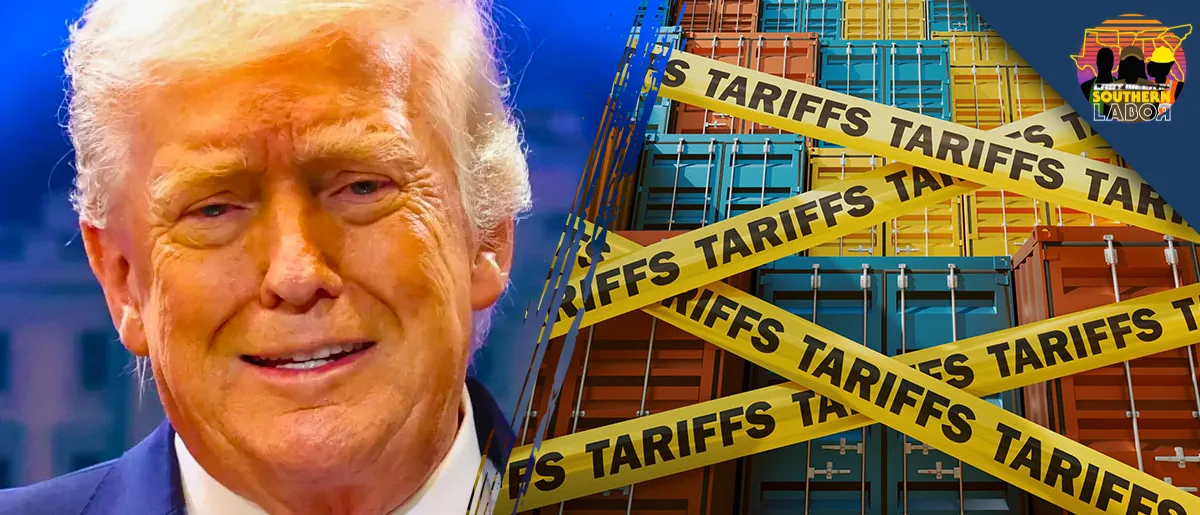
- The Supreme Court just handed President Trump a massive defeat on his signature trade policy. On Friday, the Court ruled 6-3 that Trump exceeded his authority by using a 1970s emergency statute to unilaterally impose sweeping tariffs on nearly all U.S. trading partners. Chief Justice John Roberts, joined by two Trump appointees and the three liberal justices, stated the president must have “clear congressional authorization” to levy such massive taxes. The International Association of Machinists (IAM), praised the decision, arguing that while targeted tariffs are useful against bad actors, Trump’s arbitrary, sweeping taxes caused economic chaos and burdened everyday consumers. However, a defiant Trump immediately announced plans to resurrect the tariffs using different legal avenues, ordering a new 10% tax on imports under the 1974 Trade Act. While the Court struck down his use of emergency powers, Trump made it clear he intends to keep tariffs as the central weapon of his global trade war
- The Teamsters are suing to block UPS from implementing a new driver buyout program, arguing the offers violate their 2023 contract by bypassing the union to deal directly with workers. UPS claims the buyouts are necessary to reduce its workforce amid declining package volumes, warning that blocking the voluntary program will force the company to conduct mandatory layoffs instead. Despite the pending emergency injunction request in federal court, UPS rolled out the program last week
- The American Federation of Teachers (AFT) and their affiliate the American Association of University Professors (AAUP) are demanding that the Securities and Exchange Commission investigate apparent inaccuracies contained in regulatory filings submitted by Apollo Global Management regarding its relationship with Jeffrey Epstein. AFT represents 700 employees at an Apollo subsidiary that provides healthcare, and holds $27.5B in capital commitments to Apollo through the union’s pension funds. In their press release, the AFT notes that “the Epstein files revealed new details of multiple meetings over several years between convicted pedophile Epstein, Apollo CEO Marc Rowan and his Apollo co-founder and former CEO Leon Black—including discussions over private tax matters for the founders’ family offices. The files also appear to suggest that Black’s secretary asked a third Apollo co-founder, Joshua Harris, to funnel a $2.4 million payment to Epstein in June 2014.”
- A federal court in South Carolina handed the International Association of Fire Fighters (IAFF) a major victory regarding the 2024 firing of Greenville Local 2261 President Gregory Cargill. After management repeatedly refused to meet with him as a union leader, Cargill sent a letter to a City Council member detailing urgent concerns about safety, training, and department morale. In response, the chief fired him for allegedly violating the “chain of command.” The court rejected the city’s attempt to dismiss the lawsuit. Even though the litigation is ongoing, this ruling has implications for state and municipal workers: it establishes that management cannot weaponize “chain of command” policies to silence union leaders.
- Since January 2022, St Louis, MO has unlawfully halted promotions within the city’s fire department in what the IAFF calls a misguided attempt to “restructure.” The union says this created an understaffed department. IAFF Local 73 fought back through litigation, and on December 31, 2025, a judge finally ruled in the union’s favor. The ruling pushed the city to settle, and now 27 long-overdue promotions have gone through.
Strikes & Bargaining
- In a historic victory for Southern autoworkers, UAW members at the Volkswagen plant in Chattanooga, Tennessee, overwhelmingly ratified their first-ever union contract with a 96% approval margin, with 75% of workers turning out for the vote. The four-year agreement secures major economic gains, including a 20% wage increase, significant healthcare cost reductions, and at least $14,200 in guaranteed bonuses per worker. Crucially, the contract establishes firm daily work rules and strong protections against plant closures, replacing vague corporate promises with concrete, enforceable job security. On our program Saturday, bargaining committee co-chair Steve Cochran highlighted how these foundational protections and predictable schedules bring true peace of mind to the workforce, noting, “Anytime you go to work and you know what your job’s going to be when you get there… it makes your life a lot easier and a lot less stressful.”
- Southern nurses are proving that healthcare workers can take on massive hospital systems – and win big. Down in Texas, over 700 registered nurses at St. Joseph Health in the Brazos Valley just held a rally on February 19. Fresh off a huge union election win in December, these nurses are gearing up to bargain their first contract with a laser focus on securing safe staffing ratios and improving workplace safety. Meanwhile, their union siblings in Kentucky and West Virginia are showing them exactly what’s possible when nurses stand together. Over 700 nurses at nine Appalachian Regional Healthcare facilities in the two states just overwhelmingly ratified a new three-year contract. They secured an average 10% wage increase, secured 12 hours of holiday pay for night shifts, won new penalty-free “Wellness Days” to combat burnout, and successfully fought off all concessions. From the Brazos Valley to the Appalachian Mountains, nurses represented by National Nurses United are organizing to ensure that both healthcare workers and patients get the respect and care they deserve. Meanwhile in Alabama, the state has one of the highest nursing shortages in the country, and one of the lowest average nursing salaries. Not unrelatedly, there are virtually no nurses unions in Alabama.
- Workers helping refugees survive global conflicts just won a major fight of their own. Nearly 700 employees at 13 International Rescue Committee (IRC) offices nationwide just ratified their first-ever union contract with OPEIU. These workers provide critical services like case management and legal aid to immigrants and people fleeing war zones, yet many previously struggled with heavy workloads and insecure, “limited-term” employment. This new contract changes the game. It secures immediate wage increases, just cause protections, and permanent employment status for those temporary workers. It also establishes stronger safety standards and gives workers a real voice in their grueling day-to-day operations. Starting with a single office in Dallas back in 2023, this organizing wave means nearly half of all US-based IRC employees are now unionized, proving that nonprofit workers don’t have to sacrifice their own livelihoods to do good in the world.
- The WNBA’s popularity is exploding, and the unionized players who built that success are fighting tooth and nail for their fair share of the pie. The players’ union (WNBPA) just handed the league a new contract proposal, demanding 27.5% of gross revenue. This is a slight compromise from their previous 31% ask, and even that is a compromise from professional sports standard revenue sharing of approximately 50%, it is much higher than the current share: less than 10%. So this ask would significantly improve players’ position. The union also offered concessions, like phasing out team-provided housing for max-salary veterans. Management, however, is crying broke. The league claims this deal would cause $460 million in losses and is pushing to share net revenue instead, while the union says this is “absolutely false.” The two sides remain deadlocked and could strike or lock out at any time.
Political & Legislative
- The government just proposed a rule that unions warn could drag meatpacking plants back to the horrific days of Upton Sinclair’s The Jungle. The USDA, under the Trump administration, has proposed lifting line speed limits in pork and poultry processing plants. Major labor unions, particularly the UFCW and RWDSU, are condemning the move, warning that forcing workers to keep pace with accelerating machinery prioritizes corporate profits over human lives. In these plants, workers already perform highly repetitive knife cuts at blinding speeds—up to 140 birds per minute in poultry plants. Unions point out that increasing these speeds directly leads to more amputations, severe lacerations, and debilitating repetitive motion injuries. In fact, the USDA’s own studies from just last year confirmed that faster lines increase these exact risks. Beyond worker safety, unions warn that uncapping speeds compromises the safety of the food supply itself. Labor leaders are urging workers and consumers alike to fight back against this deregulation during the upcoming public comment period.
- Wall Street wants to create a massive coast-to-coast railroad monopoly, but a bipartisan coalition is stepping up to pump the brakes. Union Pacific and Norfolk Southern are trying to merge into a corporate giant that would control over 40% of all U.S. rail freight. Now, 46 members of Congress and agriculture leaders from 10 states are demanding the Surface Transportation Board (STB) heavily scrutinize—or block—the deal. They warn that this historic consolidation will kill competition, spike shipping prices, and cause supply chain meltdowns that hurt everyone from domestic manufacturers to family farmers and everyday consumers. Under new STB rules from the early 2000s, these rail giants must prove their merger will actually enhance competition—a tough hurdle. The STB already rejected their first application, but the railroads plan to try again in March.
- The UE lauded the results of a new poll that shows a majority of Americans support Medicare-For-All
- Workers at Mersen – an advanced materials manufacturing plant in Columbia, TN – held an informational picket, protesting what they are calling a “malicious” pattern of behavior from their company that includes multiple rounds of layoffs after the workers voted to unionize, even as the company is getting millions of dollars from the public in the form of grants and contracts. They are unionized with the IUE-CWA
Internal Union Affairs
- The labor movement just lost one of its most towering champions, a man who famously proved that civil rights and workers’ rights are completely inseparable. This week, unions across the country are mourning the passing of the Reverend Jesse Jackson. We found statements from the AFL-CIO, UAW, UE, IATSE, CWA, AFT, IAM, and SEIU. Whether he was rallying with the UAW during the recent Stand Up Strike, walking arm-in-arm with striking IAM mechanics at Eastern Airlines, or fighting alongside the SEIU for the dignity of everyday care workers, Reverend Jackson was a lifelong fixture on the picket line. Labor leaders across the movement are celebrating his legacy of building powerful, multiracial working-class coalitions, particularly through his Rainbow PUSH Coalition and his historic presidential campaigns. The overarching message from Organized Labor is clear: Jackson didn’t just preach about economic justice; he showed up for it. He demanded that workers get a fair share, not charity, and he recognized that true freedom requires economic opportunity for all. His iconic rallying cry of “I am somebody” will continue to echo across bargaining tables and picket lines for generations to come.
- The annual union numbers are out after a delay due to the government shut down. The nationwide union density rate moved up just a notch, from 9.9% to 10.0%, with the raw number of workers represented by unions increasing to a 16 year high. Public-sector density (32.9%) remains significantly higher than the private sector (5.9%). Most interestingly, federal sector union membership is also reported to have increased. Black workers continue to have the highest membership rate at 11.4%, compared to white (9.9%), Hispanic (8.9%), and Asian (8.7%) workers. As always, union members earned a higher median weekly wage ($1,404) than non-union workers ($1,174). LaborNotes is right to call into question the federal numbers in particular. It’s important to understand that these numbers are derived from a survey where participants are asked 1) if they are a union member and 2) if not, are they represented by a union. The numbers do not come from verifying union membership by looking at dues receipts or by analyzing the number of workers covered by contracts. Particularly in the federal sector, there simply are not more union members than last year. We know this because all the federal unions have reported significant membership declines and have made staff cuts in accordance with that fact. And yet, the BLS reports that there are 75,000 more federal union members than last year. So how do we reconcile this? My theory is that due to the moribund nature of the federal sector labor movement (particularly at the local level), many people did not know they were represented by a union, and so in the past would have responded “no” to the BLS. I believe the BLS has always undercounted the number of federal workers represented by unions. If you combine the number of federal workers that AFGE, IFPTE, NFFE, and NTEU purport to represent, it’s always been over half of the non-postal service federal sector. But density has been hovering around 30% for ages! I think the undercount is due to so many people simply not knowing they are represented by a union. In 2025 however, federal unions took center stage in fighting the Trump administration on behalf of their members, and so many people realized they are represented by a union for the first time, and so answered yes. No doubt there are also people pushed in the opposite direction due to Trump’s canceling of union rights and union contracts, but the number of workers claiming union representation increased anyways, which makes me think that federal unions have more credibility among the federal worker than the Trump administration.
- Over 500 members of the American Federation of Government Employees (AFGE) gathered in D.C. for their annual Legislative Conference. President Everett Kelley rallied attendees to fight for collective bargaining. The conference featured panels with journalists and pro-labor lawmakers. An interesting guest was Senator Ron Johnson, who was there because of his sponsorship of a bill to pay government workers during shutdowns. Members also honored outstanding activists and paid tribute to slain VA nurse Alex Pretti.
- Lauren McFerran, former chair of the NLRB, is the new executive director of the AFL-CIO’s Technology Institute. In accepting the position, she said, ““I am grateful for the opportunity to shepherd the Tech Institute’s vital work advancing a technology agenda that centers workers and their unions across the entire innovation ecosystem. This is a watershed moment for working people, when rapid technological change is poised to define the future of millions of jobs. The Tech Institute has a unique and essential role to play in cultivating ideas and policy strategies grounded in the voices and values of workers, the labor movement, and our partners and allies.”